An ongoing series of interviews with folks talking about what their creative life is like. This month’s interview is allison.
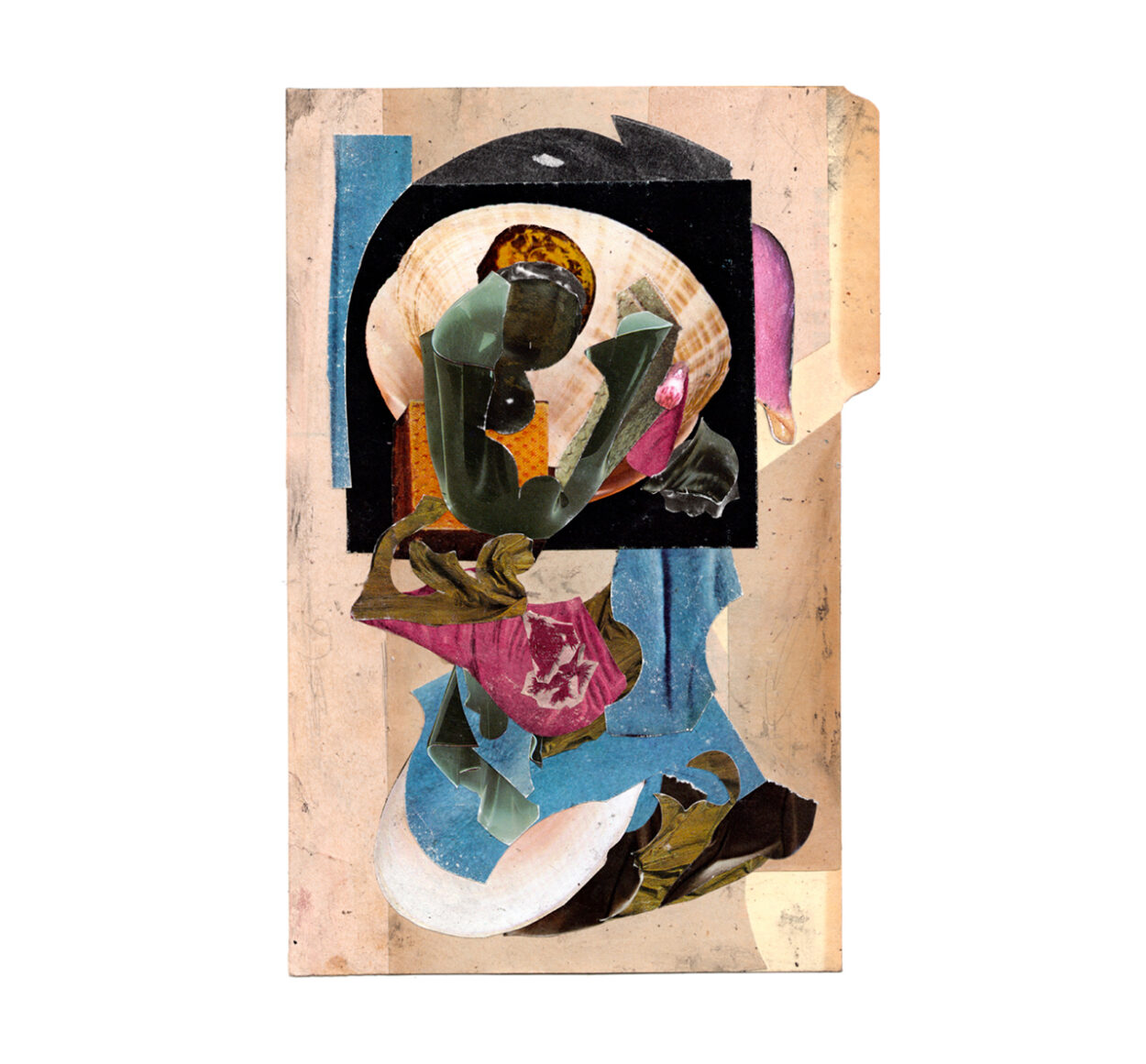
Interview with allison
I have a set of questions that I came up with that are a little bit Krista Tippett, a little bit Danielle Krysa, and a lot bit my own curiosity. I think talking about our creative stories is a way to bind us together and encourage us to keep going on our own creative path. I’m excited to be asking these questions and to be sharing these creatives’ answers with you. This month’s interview is allison.
Tell my readers a little bit about you.
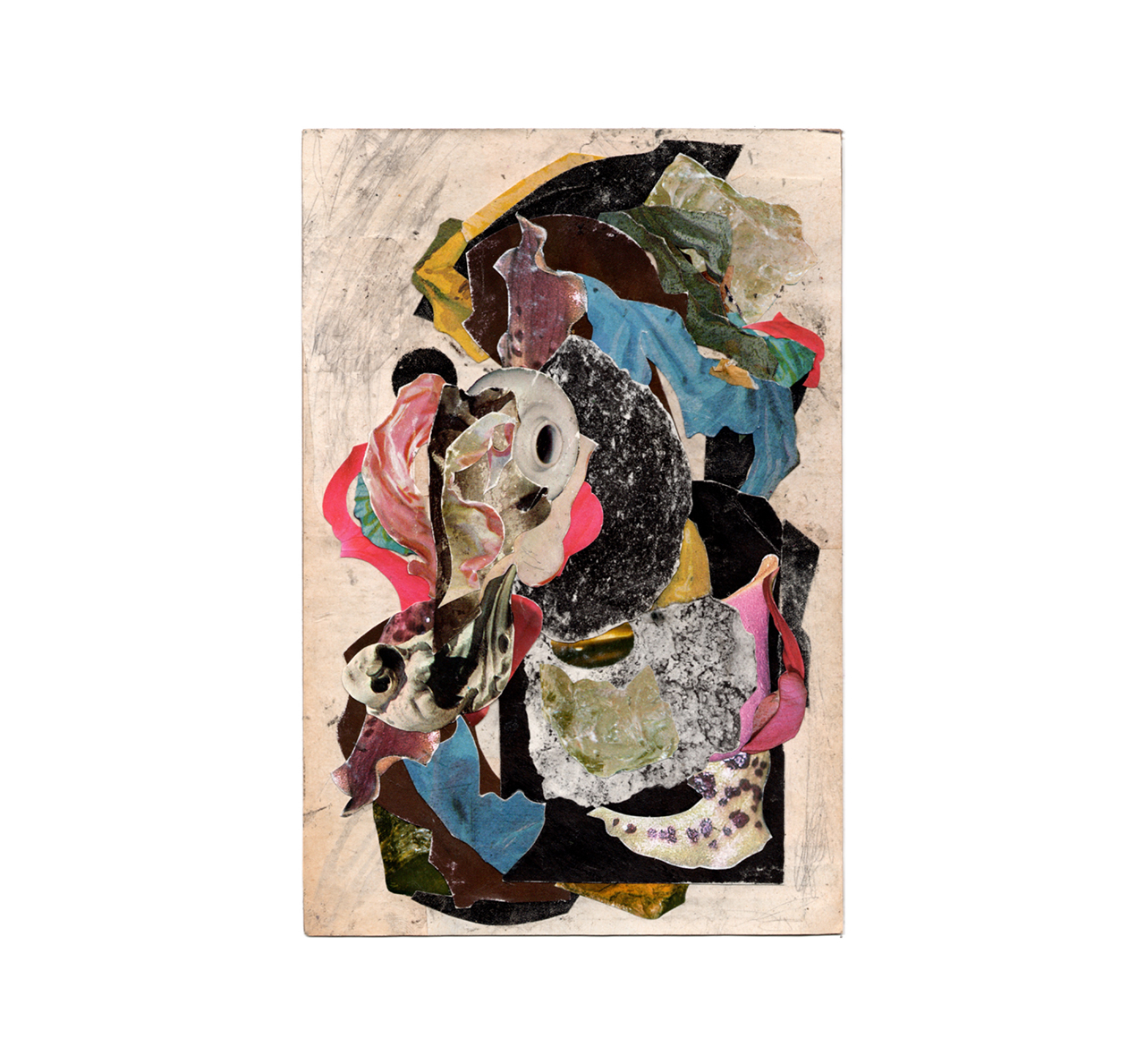
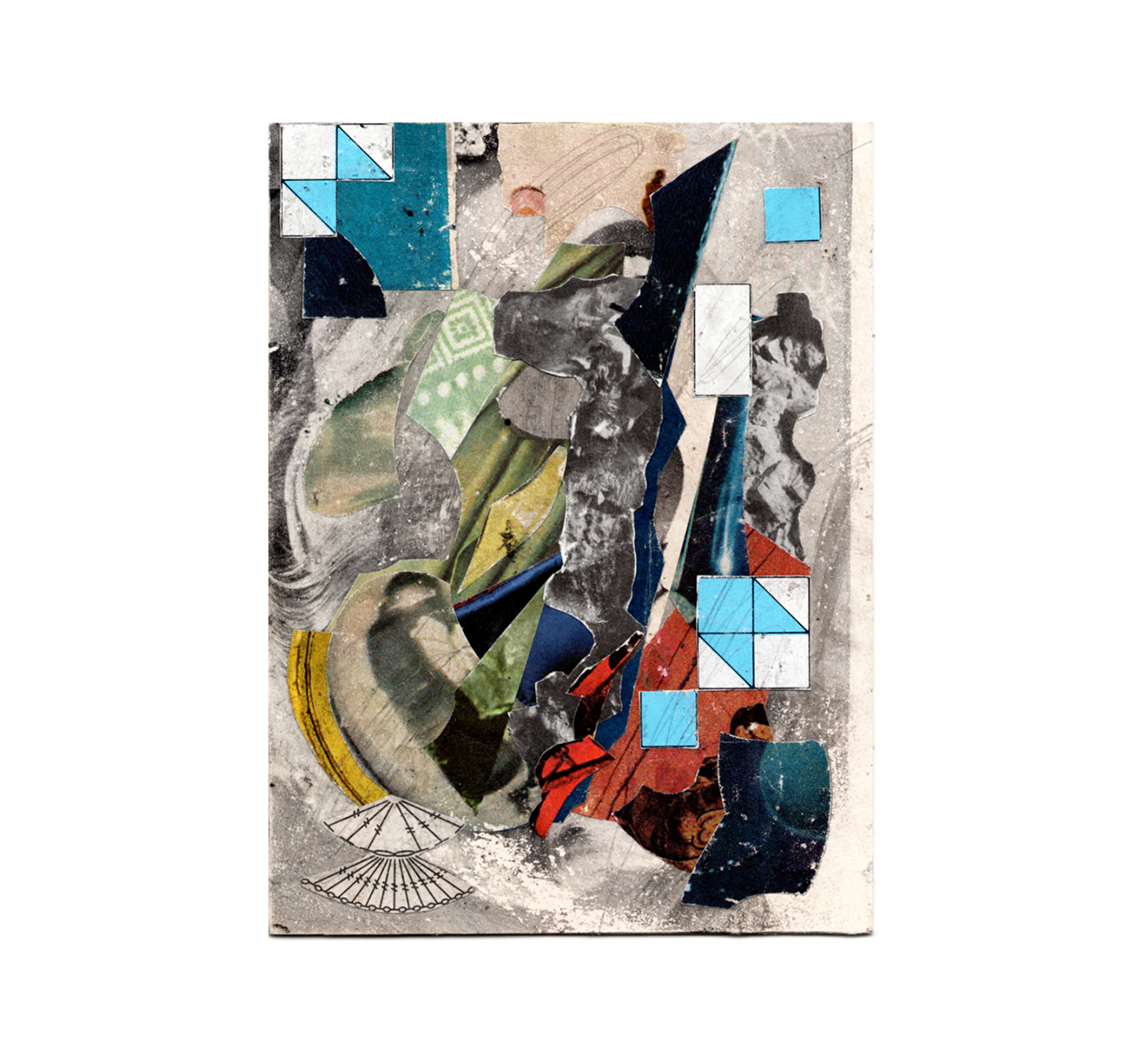
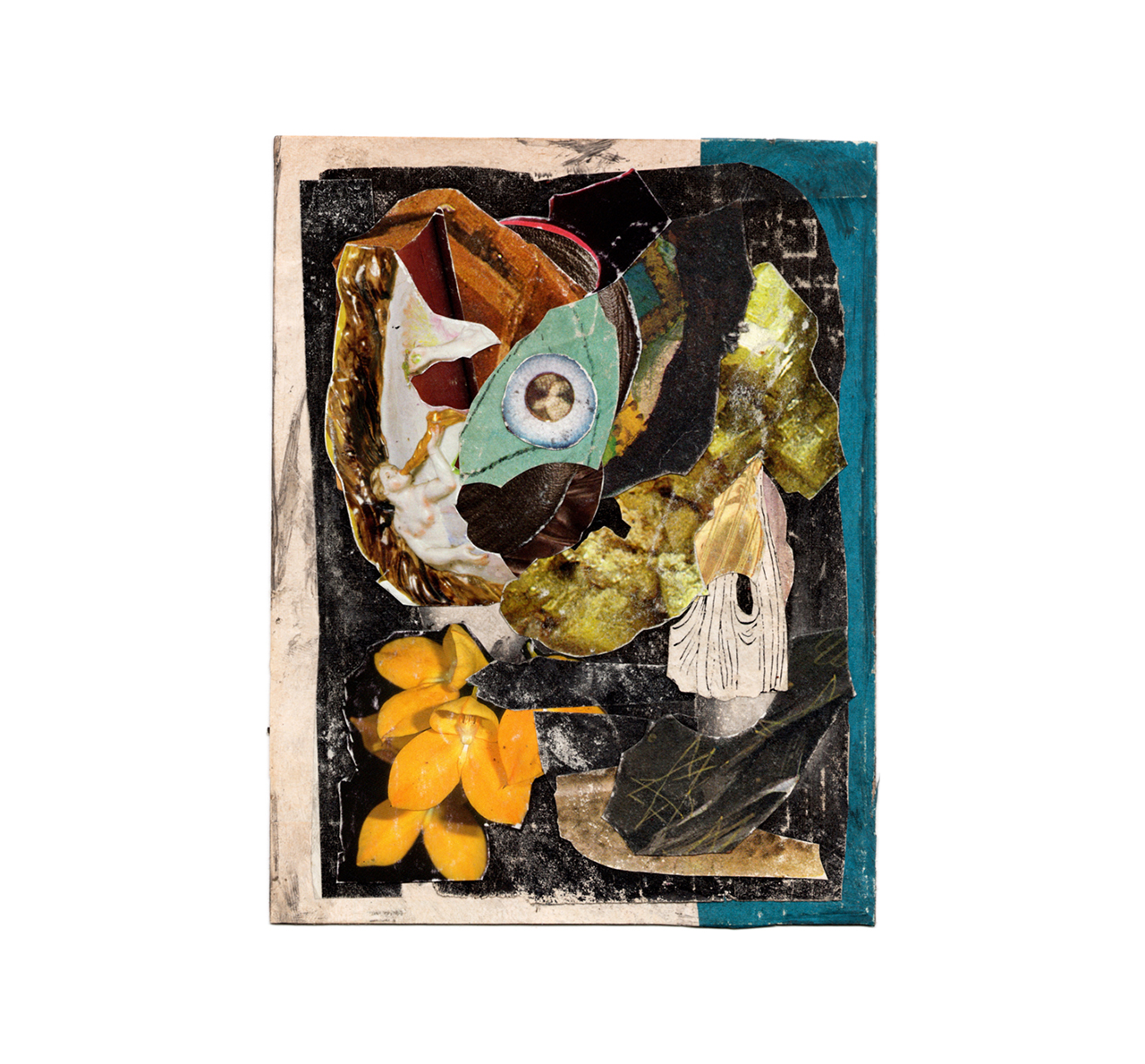
My name is allison, and my pronouns are they/them. I’m a queer, nonbinary artist, zinemaker, graphic designer, independent publisher and arts organizer living and working in Minneapolis. I also co-founded Twin Cities Collage Collective nearly a decade ago, which is sometimes what people know me from. Much of my work is collage-based, as I believe collage to be a vital outlook and framework for life. I also make zines and artist books, am an active mail artist, and have been working as a graphic designer for close to twenty years. Abstraction is my favorite, most of my work is pretty abstract and my zine projects often omit writing or text.
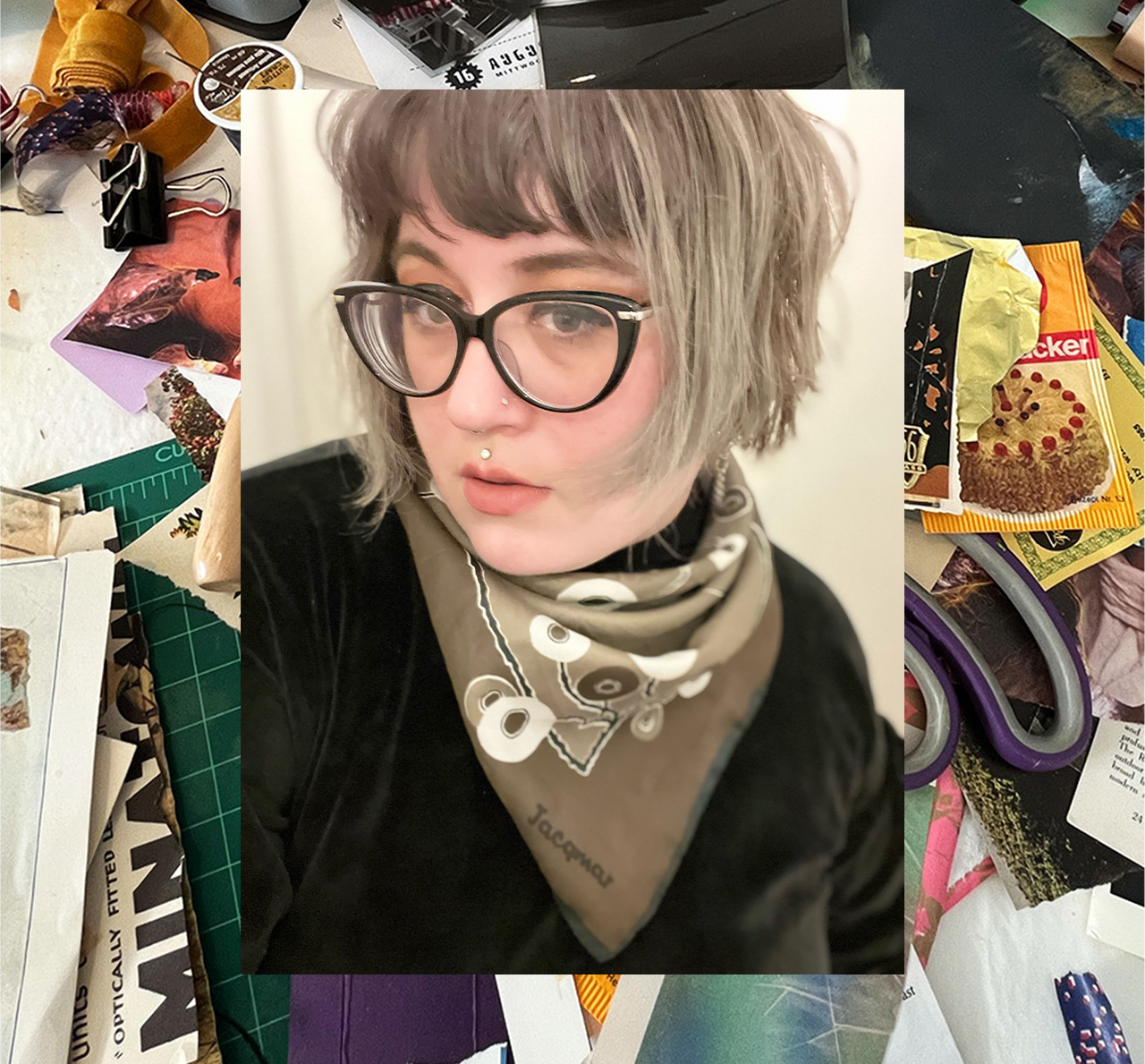
In addition to my art practice and freelance design work, I also co-manage a hair salon in Minneapolis with my roommate! So fun to work around other creative people — I dropped out of cosmetology school over 20 years ago, but I love being around the energy of the stylists, and you meet the most interesting people in that environment. We live in an apartment with our cats (both living and ceramic), lots of books, and a shared doll collection (some cursed, some not). My studio is in our home, so there’s always little bits of paper stuck to everything (including the cats, and occasionally I find scraps in the bathtub or in my bed. Whoops! Hazards of the medium.)
What is your first memory of creativity?
Many of my earliest memories are based around making things — I can’t really remember a time when I wasn’t interested in drawing, cutting materials up, learning various techniques and processes through observation, trial-and-error, and/or research. My mom was an arts educator who transitioned to teaching elementary ed, and there were always a lot of materials around, especially in the summertime when she’d have to bring a lot of stuff home from her classroom.
I was really interested in her art history textbooks from the 1970s and pored over them often, but had some real complaints as a little kid about the lack of representation for women and other underrepresented groups (looking at you, H. W. Janson. I’ve got a one-sided beef with you, despite the fact that you passed away three years before I was born!) — famously, his textbook, which has been regarded as a classic for a long time, included no women artists. As a kid, I was really interested in looking at the world closely, then exploring and responding by making something — that hasn’t really changed!
I had the fourth edition of Janson for my college art history classes and yeeeeeah, very few women in there. -Misty
What did you love to make as a kid and are you still making some variation of that now?
The first thing I really remember being into was drawing, and I drew pretty consistently for many years of my life. My dad taught me to hand-sew and I liked making little stuffed toys, bags, doll outfits — these were never polished or well-constructed, but I think that experience gave me an affection for assemblage and some early “collage thinking”. I see all these interests and practices as a kid as something that actively continues to impact my creative projects now, because all of that is interlinked.
What is your favorite creative supply and why can’t you live without it?
So hard to choose, but I’m never without a few pens/pencils, pair of tiny scissors, a glue stick, washi tape, and (usually) a bone folder. I have a zip pouch that I use as a combination wallet & everyday supply bag, which also houses my planner. I can be sort of absent-minded, so it’s nice to only have to grab one thing other than my keys — having those supplies at the ready saves the day pretty often, actually, but it’s also nice to be able to pick up a project at a moment’s notice. However, sometimes I forget to move things around, which has resulted in situations like the Dublin airport confiscating my favorite tiny scissors (noooo!) as they’re much stricter than the U.S. is about carrying any sharp implement.
What is a creative question you ask regularly?
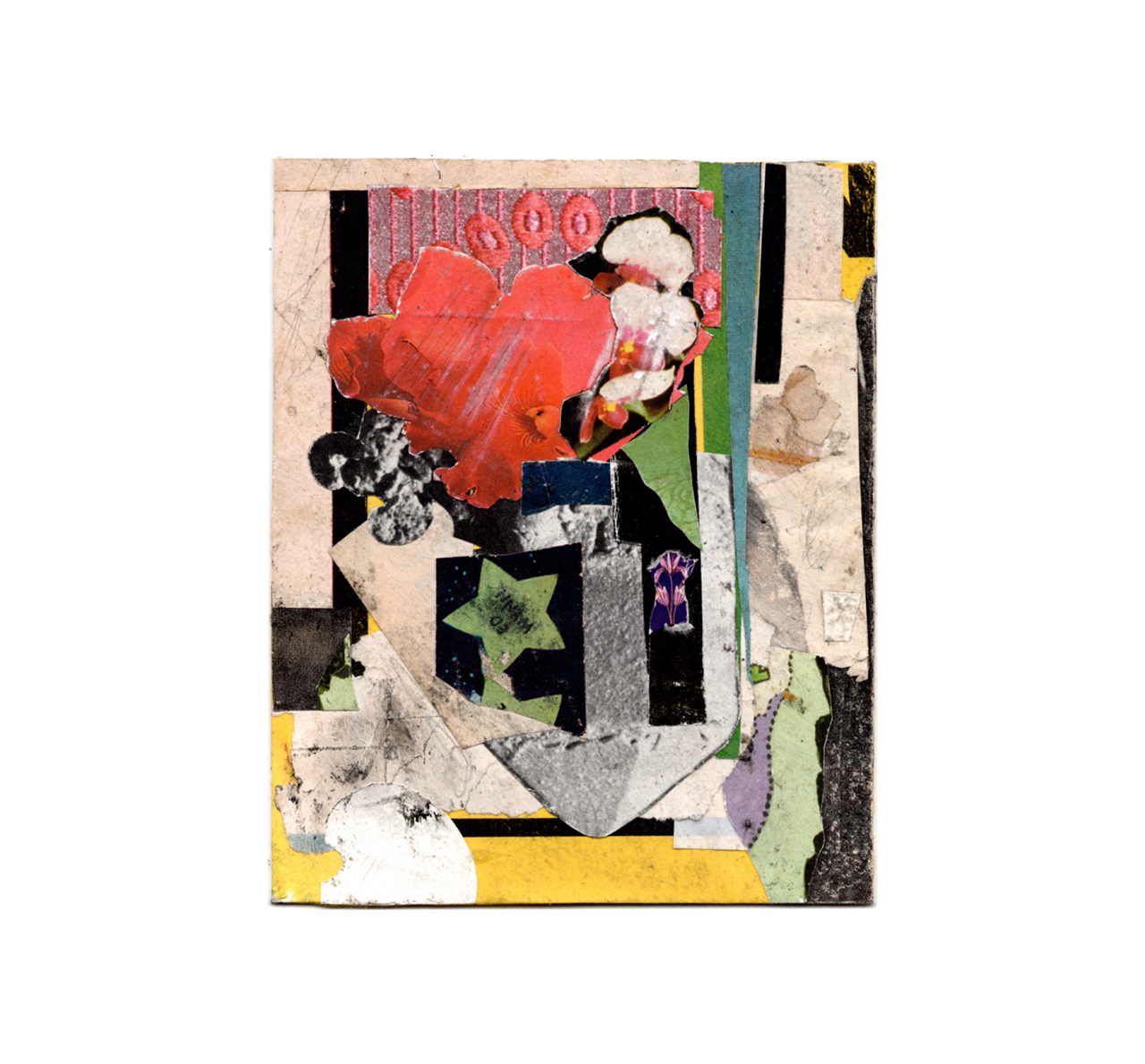
At the risk of giving a non-answer, I really try to approach the world with curiosity, and as a chatty Gemini, I ask a lot of questions — that’s something I see as pretty inherently creative and part of my process. I think that my core creative practice with paper collage is an ongoing process of questioning. My background is in American Studies (cultural studies/sociology/history) and Gender, Women & Sexuality Studies, so I’m always interested in engaging with the print ephemera I find from a variety of angles. I really love to talk with folks about what they notice on a walk, at a museum, in what they’re watching or reading. There’s so much to learn from one another all the time, but I’m also interested in learning how others experience the world by asking a lot of questions.
A tool I really like are the Oblique Strategies cards by Brian Eno and Peter Schmidt. The deck provides over a hundred “worthwhile dilemmas” that aren’t commonly phrased as a question, but certainly get you questioning, and questioning can lead to getting unstuck, to reconnecting with your process, to new breakthroughs. While you can get physical decks of the cards, there are also a bunch of websites that have all the strategies freely available.
What does your creative practice show you over and over?
Possibility, resiliency, curiosity, a sense of putting myself back together again and again. My creative practice has deeply reshaped my relationship to failure. A lot of my work comes from a place of fragmenting what’s already existing but also what’s been discarded, and rebuilding it into something new — abstracting and reforming it, making it personally legible. It’s an experience a lot of queer and trans folks can relate to, I think, as well as folks who have navigated mental health challenges or been in some kind of recovery.
Participating in a creative conversation is how I built a framework of valuation and trust with myself, and how I began to think about the world differently. Hierarchies and hegemonies can be interrupted, and when they’re interrupted, they weaken, because something else is being made collaboratively. My background with art making and creativity is rooted in the experience of growing up fat, queer, depressed and neurodivergent. I was bullied a lot as a young person, and began to feel that I was a failure before I ever got started, that I was always starting from a deficit. But no one could give me permission to get started; relative to my own experiences, that was something I had to do that for myself. The dominant culture will never dole out that permission, but we can build stronger communities and networks of care to support creative exploration alongside other basic needs, and it can start with attending to our own processes.
What gets you to start a new project?
Curiosity, generally. Some kind of inspiration or a flash of wondering. But I’m a project person — I love working on things independently and collaboratively, doing really process-based work. I’m always working on something! In my case, the question might really be “what gets you to finally take a break?” I don’t have a great relationship to rest and tend to overwork myself, which is something I am putting some attention to at the moment.
What is a book on creativity that you come back to often? Why?
I really love nonfiction about creative practice, research, and art making. Right now, I’m reading Mark Alice Durant’s biography of the filmmaker Maya Deren, which has a lot of wonderful information about her processes and approaches in addition to discussion of her life.
Corita Kent and Jan Steward’s Learning by Heart is a great one, filled with practical and kind approaches based on Corita’s teaching practices. While I don’t make music or audio projects (maybe someday), experimental music is really important to me, and there are a couple of books of interviews by Mick Fish with the early industrial / electronic band Cabaret Voltaire, which deeply impacted the ways I think about collage when I first read them 15ish years ago. A rich vein to return to!
The book that’s probably impacted me most is a biography by Simon Ford of the experimental art collective COUM Transmissions and the resulting experimental industrial group Throbbing Gristle called Wreckers of Civilization. I read it at a very desperate and lonely time in my life, and it electrified me — all of life as a creative project, extremity and abstraction included. I also return to writing by the queer filmmaker Derek Jarman pretty regularly, and work by/about the mail artist Ray Johnson.
How did we meet?
We definitely met on social media at some point, but I can’t remember exactly how or when. I think I’ve been following your work for over a decade — probably some combination of Twitter, blogging and Instagram. Of course, it’s been the platform Bluesky where you and I have been able to really connect in a meaningful way. I hope that we have the opportunity to get together face-to-face sometime, I really admire your creative approach to seemingly everything in life, your thoughtful consideration and engagement with the world, your sense of humor, and of course, the incredible creative work that you make!
I’m definitely making star eyes in your direction as I read this! – Misty
You live in Minneapolis and your town has been through it in the past year. (I’m sending you and yours a lotta love for pulling together and caring for each other.) What has this community meant to you and your practice during this time? What is something that has surprised you in a good way?
Oh, there’s so much to say about this. Community is everything, it’s at the heart of everything I do, and it’s all held in a web of care. Care is a radical art, a disruption of power, and a move towards repairing rupture with ourselves and with others. Community care and involvement have fueled a lot of my thinking and action, particularly since the uprising in 2020 following the murder of George Floyd.
There’s been a lot of learning in real time, expanding processes and approaches, building new systems together, resourcing one another however we can. It’s led to a lot of questions and action, too — what happens when we make room for one another and for ourselves, when we invest care, time, patience, curiosity, and attention in viewpoints and identities that are often under-represented and under-resourced? This thinking can be applied to everything, including finding ways to bring folks together or finding ways to share their work with a wider audience.
How can people find you?
Website: allisonanne.com
Further links: bio.link/allisonanne
Instagram: @allisonannecollage + @nettleformed
Bluesky: @allisonanne.com
allison, thank you for sharing your art and your creative stories with us! I had so much fun reading your answers to my questions. And I know my readers will enjoy it too. (These photos belong to allison. They graciously allowed me use them for this interview.)
If you want to know more about this series read the post What about these Interviews? Or find the whole series of interviews here. If you are non-binary or women-identifying artist and are interested in sharing your answers to these questions and be featured here on the blog, I’d love to talk to you about it!! Let’s connect via email.
Thank you for stopping in! Nothing on my website is AI generated. Not the art I make and not the words I write. If you’d like to keep up with what I’m working on, I’d love to have you as a newsletter subscriber. I include blog posts from here, cool things I find online, and occasionally pictures of my dog. Sign up here. Or if you want to drop me a note to catch me up on what you’re working on, email me here. Lastly, if you like what I do and want to support my work you can buy me a coffee.
Leave a Comment